

Artificial Intelligence Can Structure Luxury Travel - But Only Humans Can Validate It
What two new reports reveal about trust, technology, and the role of luxury travel advisors in the dawning era of AI.
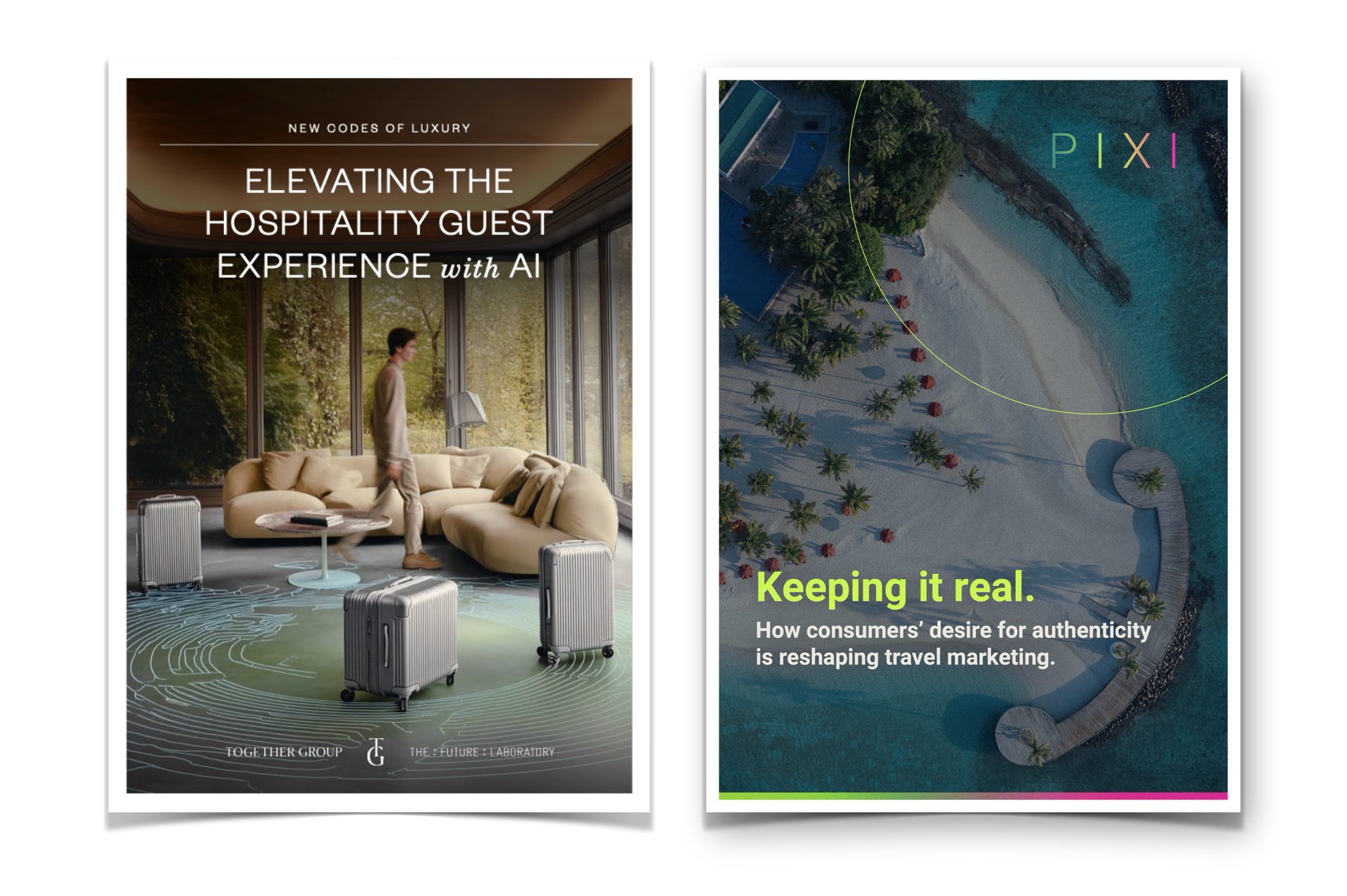
In November, two new reports released within almost a week of each other offer the first clear, empirical view of where Artificial Intelligence (AI) in luxury travel is heading.
One examines how AI will reshape hospitality from within. The other warns that AI has already undermined trust in travel marketing. When considered together, they show a simple truth:
AI will structure the luxury experience, but humans will validate it. And travel advisors remain the most trusted validators in the market.
The first report, Elevating the Hospitality Guest Experience with AI, is a collaboration between The Future Laboratory and Together Group. It argues that luxury hospitality is held back by outdated systems and fragmented data. AI, the authors note, can help unify these systems and raise service standards.
The second report, How Consumers’ Desire for Authenticity is Reshaping Travel Marketing by PIXI Group, identifies a different problem. It finds that travelers no longer trust the images, descriptions, or content they see online. The rise of synthetic imagery has created confusion and suspicion at a time when major travel decisions depend on credible information.
One report focuses on innovation and the other focuses on trust. Together, the industry has its first clear outlook of the technological landscape for travel advisors in the years ahead.
The Innovation Gap
The Future Laboratory describes the hospitality sector as one that has relied too long on physical assets and human instinct while neglecting the systems that support those assets.
In other words, many hotels still operate with multiple guest profiles for the same person, and they’re scattered across unconnected platforms.
These gaps weaken service, slow decision-making, and limit personalization. (Well, not if Abra Hospitality has anything to say about it.)
According to the report, AI can help correct this. And it ranges from merging guest records, predicting needs, adjusting itineraries, streamlining requests, or helping staff deliver what Mandarin Oriental calls “the best service…the one that you deliver before even asked,” according to Alex Schellenberger, Global Chief Brand & Marketing Officer.
The report highlights strong support among HNW travelers for these improvements:
47% of luxury travelers would pay 5-10% more for a highly personalized stay;
62% are comfortable with hotels using AI to make tailored recommendations;
55% rank data protection as their top concern, making trust central to any AI deployment.
To the authors, the path forward is a long-term, system-wide transformation.
“AI is becoming the connective tissue of the guest journey,” said Christopher Sanderson, Co-founder of The Future Laboratory, and who presented the new research at the inaugural TOURISE conference in Riyadh, Saudi Arabia last month.
“It’s already powering anticipatory service, unifying fragmented systems, and giving teams the real-time intelligence needed to truly elevate experience. But its value lies in deepening human connection, not replacing it,” he elaborated.
“AI sets the stage, humans deliver the performance. The brands that thrive will harness intelligence to create a 365-day relationship with their guests - where technology anticipates, and people personalize,” Sanderson explained.

The Trust Gap
PIXI’s report approaches the problem from the opposite direction. It argues that trust, not technology, is the central issue shaping luxury travel today.
“The rise in synthetic content is the single biggest shift the industry has seen in recent years,” remarks Emma Squire, CEO of PIXI. “Brands don’t just need content, they need credibility to help re-build confidence with their audiences.”
“PIXI ensures every asset a hotel shares is authenticated, verified, and trustworthy before being used by the travel trade that sells it,” she explained.
“PIXI is transforming the way we source visual content and information from our hotel partners,” said Neil Bedford, COO of Select Collection based in Stockholm.
While social media is responsible for more than 70% of travel inspiration, travelers cannot reliably distinguish real images from AI-generated ones. Incorporating data from the TUI Group, PIXI’s report shows that most adults across the UK, Germany, and Spain consistently misidentify AI-generated content. The report notes that while these images can “pique curiosity,” they also create a “negative impact on people’s trust.”
That erosion of trust has larger implications for the market. Affluent travelers are afraid of making expensive decisions based on manipulated or unrealistic visuals. Therefore, higher value is placed on certainty and authenticity, not digital polish. As a result, PIXI’s report finds:
88% prefer a mix of professional photography and real, user-generated content;
More than 80% say meaningful, “insider” experiences are the most memorable part of a trip;
84% believe a trusted travel designer is more valuable than unlimited online research.
The appetite for real, human guidance to anchor decision-making is rising across all demographics, including younger travelers (48% in the 18-24 age group use human experts). In this environment, the report positions travel advisors as the “new gatekeepers” for high-end clientele.
“PIXI has changed how we work with travel designers. It’s smart, efficient, and built for luxury,” said Stuart Procter, CEO of The Beaumont Mayfair in London.
Where the Findings Meet
Keep reading with a 7-day free trial
Subscribe to The Luxe Ledger: Private Edition to keep reading this post and get 7 days of free access to the full post archives.